Identity:The Second
Messenger
"I didn't write these songs to become famous. I wrote them because I wanted to leave a legacy behind."
000: Prologue
"I’ve always believed that a great song is a great song, regardless of the icing you put on top. If the melody and the chords are honest, the song will live forever."
001: The Spark
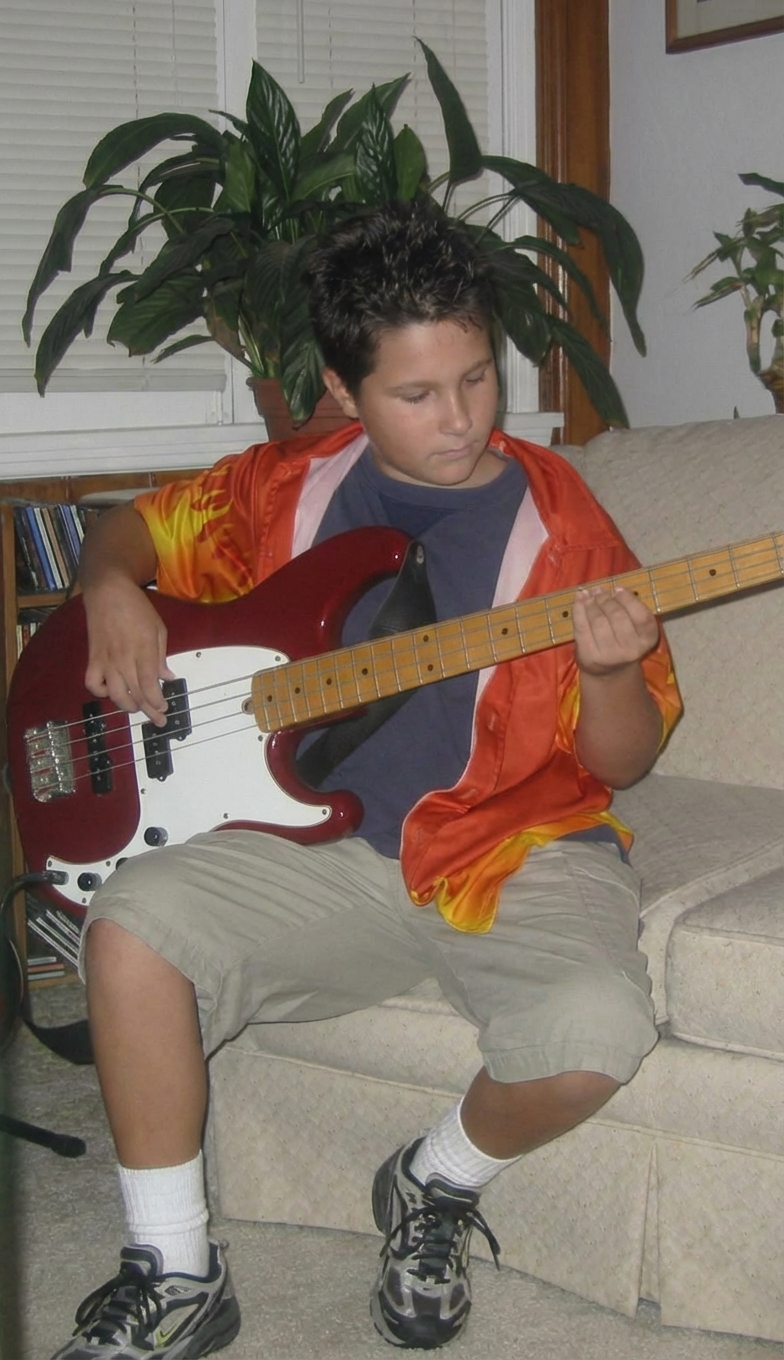
It started with a terrifying proposition in the passenger seat of my dad’s car. I had just turned ten years old when Green Day’s "Brain Stew" comes on the radio. My father - a lifelong professional musician - turns to me with an idea that changed the directory of my life forever. He was turning forty and celebrating by throwing a backyard party where his band would be performing, and he wanted me to sit in on the bass and play Brain Stew.
At that age, I looked at radio music as some kind of unattainable magic, a craft far too complex for "little ol' me." But my dad saw something I didn't. I practiced that simple, descending riff until my fingers knew it by heart. Standing on that stage just a few days later, I felt the vibration of the amplifiers and the energy of the crowd for the first time. I didn't know it then, but my life had just found its rhythm.
002: The Logic of the Six-String
I played the bass for a few months after that, but I’ll be honest: I was getting bored. I was playing simplified parts that didn't quite make sense to me. I needed patterns, logic, and a way to experiment that didn't just feel like randomness. I needed to see the whole picture.
To keep me from walking away, my dad handed me an acoustic guitar and showed me the opening to "Good Riddance (Time of Your Life)." I remember carrying guitar picks to school and obsessively practicing the down-down-up-up-down-up pattern against the seam of my jeans until the stitching started to fray.
Then, the "a-ha" moment happened. The moment I understood how multiple notes combined to make chords, the polyphonic nature of the guitar ignited something in me. Suddenly, music seemed obvious. I could see how the vocals sat on top of the chords, how the bass locked in, and where the harmonies belonged. Something in my brain was built to manipulate music. I never set the guitar down again.
003: The Academy
I grew up in the halls of West Coast Rock School, the music academy my father founded when I was fourteen. While other kids had traditional after-school jobs, I spent my free time surrounded by instruments, mentors, and the hum of amplifiers. It was here that I learned the "family trade."
In those early years, my dad bought us one of the first home recording setups available - an M-Audio FireWire interface running into GarageBand. I quickly realized that a Digital Audio Workstation (DAW) wasn't just a tool - it was an instrument in and of itself. By thirteen, I was building fully-fledged songs. They might have sounded rough, but the core was there.
Over the next twelve years, I became a teacher at that school. I learned thousands of songs, produced dozens of records, and taught hundreds of students. I saw how music could change a person’s life, just as it had changed mine.
004: The "Mike of All Trades"
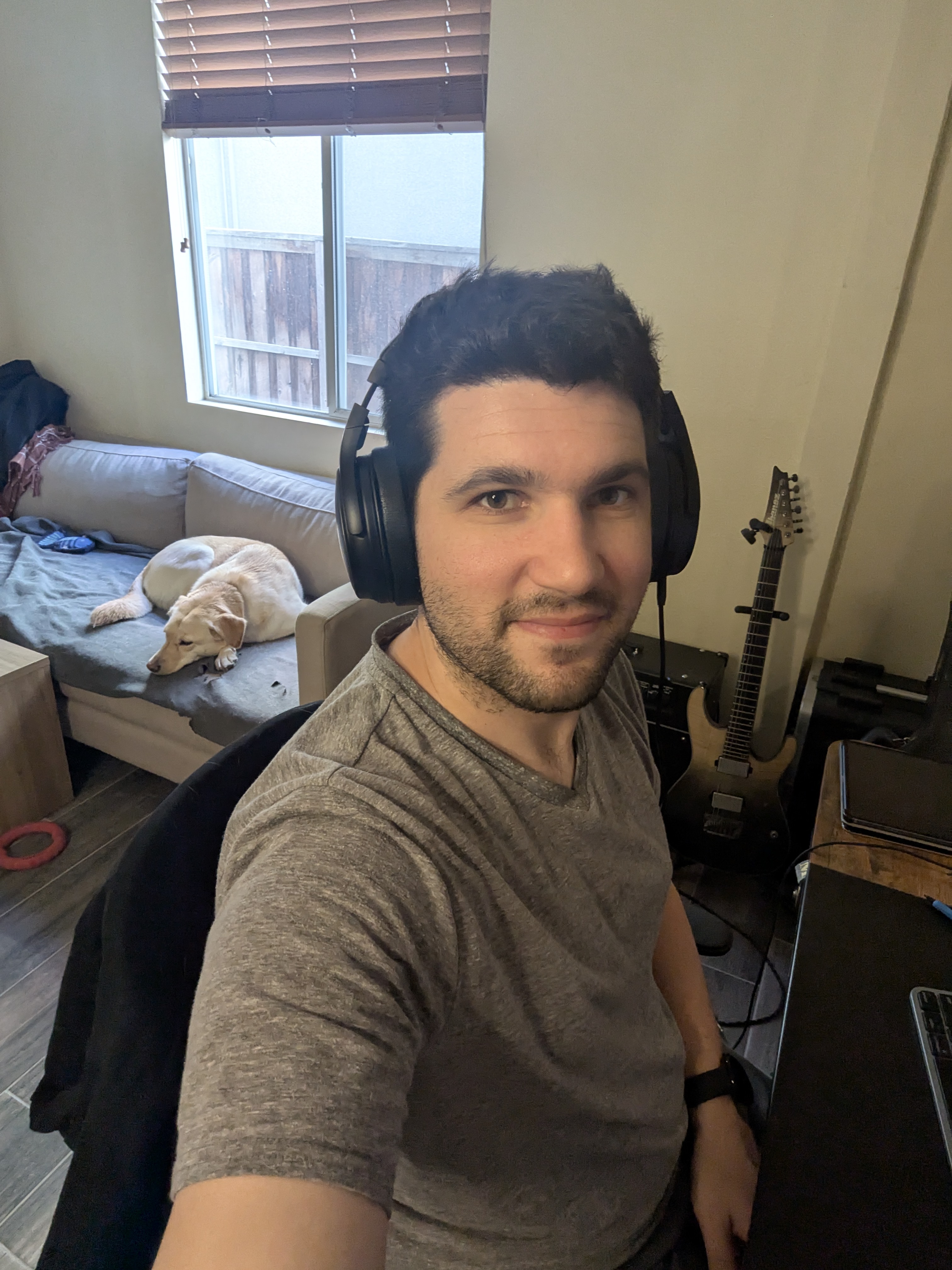
To those of you listening to these songs years from now, know that The Second Messenger was built by hand. Every note, every beat, every mix, and every master. No AI either. My wife gave me the nickname "Mike of all trades" because I couldn't seem to stay in one lane. I’m the guy on the sofa writing the lyrics - I’m the guy at the desk tracking, editing, mixing, and mastering every note.
- Songwriting: Vocal Power Pop & Beatles-esque harmony.
- Energy: High-voltage Pop-Punk (Blink-182, Green Day).
- Sound: 90s Analog Warmth & Saturation.
I never wanted to be stuck in a box. I wanted to write the "Helter Skelter" rock anthems and the "Yesterday" introspective ballads. I want you to hear the variety and know that I wasn't just following a trend—I was following the song.
005: The Intellectual Heart
I consider myself an intellectual, and science is, in many ways, my religion. I’ve always been drawn to the stars and the logic of the universe. That’s why you’ll hear sci-fi themes and scientific metaphors woven into my lyrics. Like Train’s "Drops of Jupiter" or The Beatles' "Across the Universe," I try to use the language of the cosmos to explain the mysteries of the heart.
I didn't write these songs to become famous or to make a fortune. I wrote them because I wanted to leave a signal behind. I wanted to create a repertoire of music that would stand the test of time—something you could listen to and feel like you know me, even if we’ve never met.
Encrypted Message: To My Descendants
"If you ever feel like you're struggling to find your path, remember that it’s okay to be a 'jack of all trades.' Don't be afraid to learn the logic behind the magic. Whether you’re writing a song, building a business, or studying the stars, do it with everything you’ve got."